
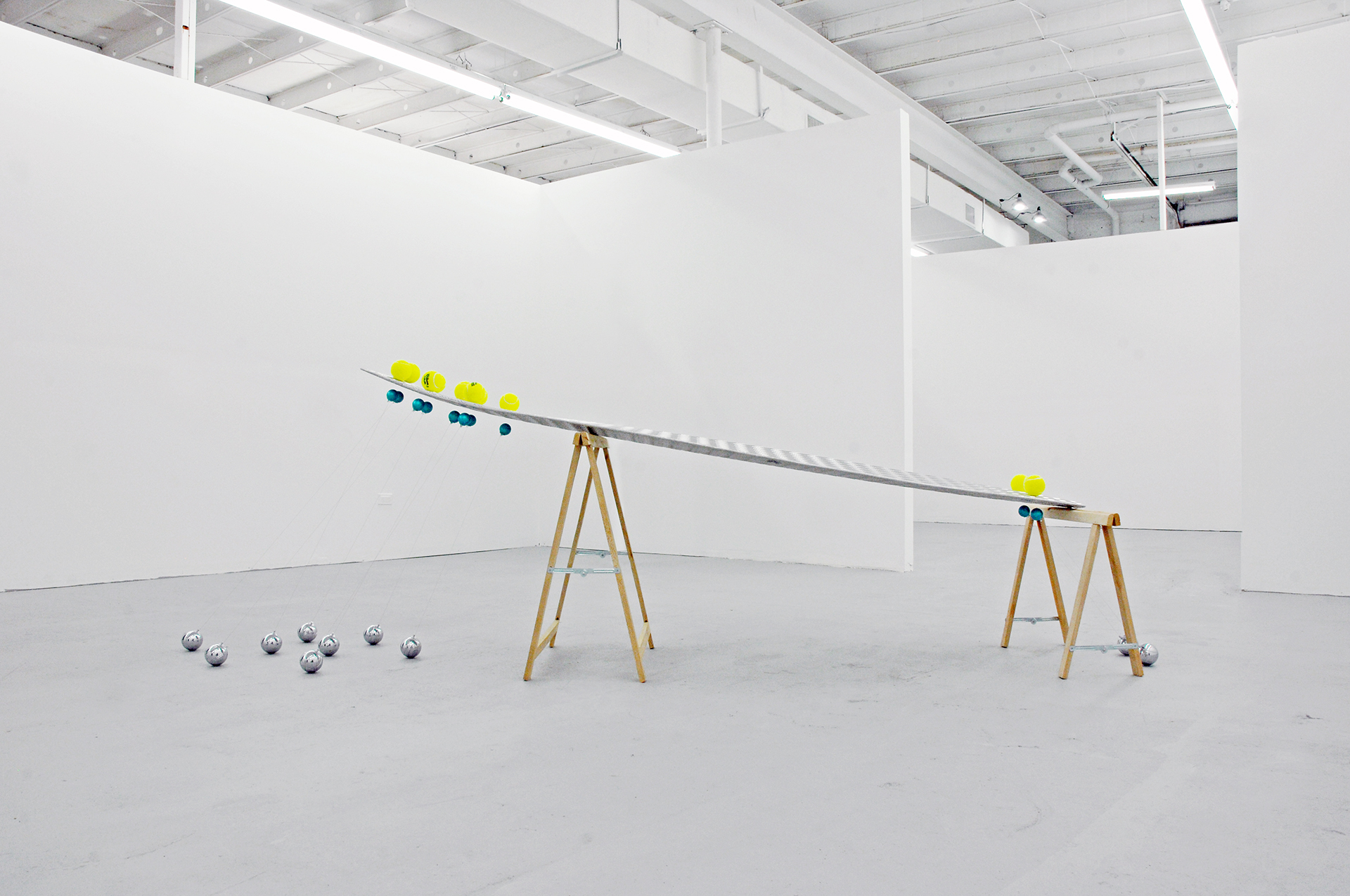
Tunnel Effect Through Malevich Influence
Magnetic Pull System
The installation Tunnel Effect Through Malevich Influence by Luca Pozzi is a profound exercise in multidisciplinary convergence, where a surfboard—an object designed to glide across the fluid surface of water—becomes the involuntary vessel for two seemingly irreconcilable pillars of human thought. Through this unexpected medium, Pozzi orchestrates a dialogue between the avant-garde abstraction of the early 20th century and the revolutionary physics of the same era.
On one side of this conceptual bridge is the Tunnel Effect (Quantum Tunneling), theorized in 1928 by the Ukrainian physicist George Gamow. This phenomenon describes the counterintuitive ability of a subatomic particle to pass through a potential barrier that it classically should not be able to surmount. On the other side stands the radical “Painterly Realism of a Peasant Woman in Two Dimensions,” better known as the Red Square, painted in 1915 by the Russian suprematist Kazimir Malevich.
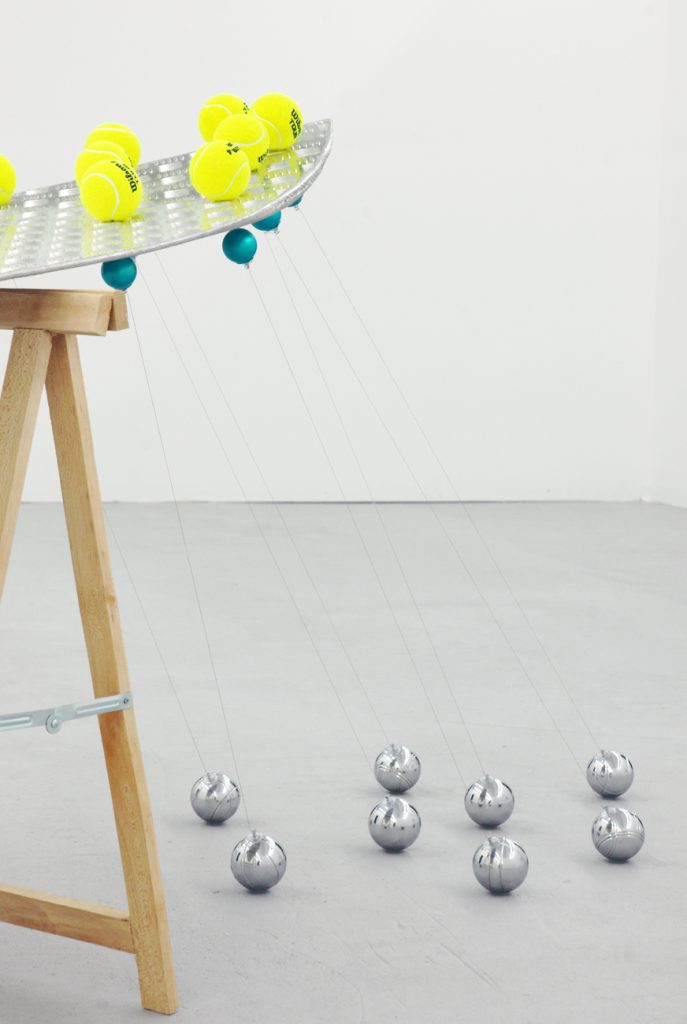
In Pozzi’s vision, the surfboard acts as a “spacetime manifold” that allows these two historical trajectories to collide. From the perspective of Loop Quantum Gravity, the surfboard’s surface represents a granular fabric where the “Red Square” is no longer a static geometric figure but a concentrated node of informational energy. The work suggests that the act of artistic creation is itself a form of quantum tunneling: Malevich’s leap into pure abstraction was a way of “tunneling” through the barrier of representational reality into a new dimension of perception.
Applying the logic of the Feynman Path Integral, the installation implies that the surfboard has followed infinite possible “histories” across the ocean of human knowledge to arrive at this specific configuration. The red geometry becomes a “probability cloud,” a state of superposition where the peasant woman, the square, and the quantum particle coexist. As the viewer observes the work, a process of decoherence occurs, collapsing these vast historical and scientific narratives into a singular, tangible experience. By merging Gamow’s physics with Malevich’s Suprematism, Pozzi transforms a sports object into a cosmological tool, proving that even the most solid barriers of discipline can be breached by the “tunneling” power of interdisciplinary intuition.
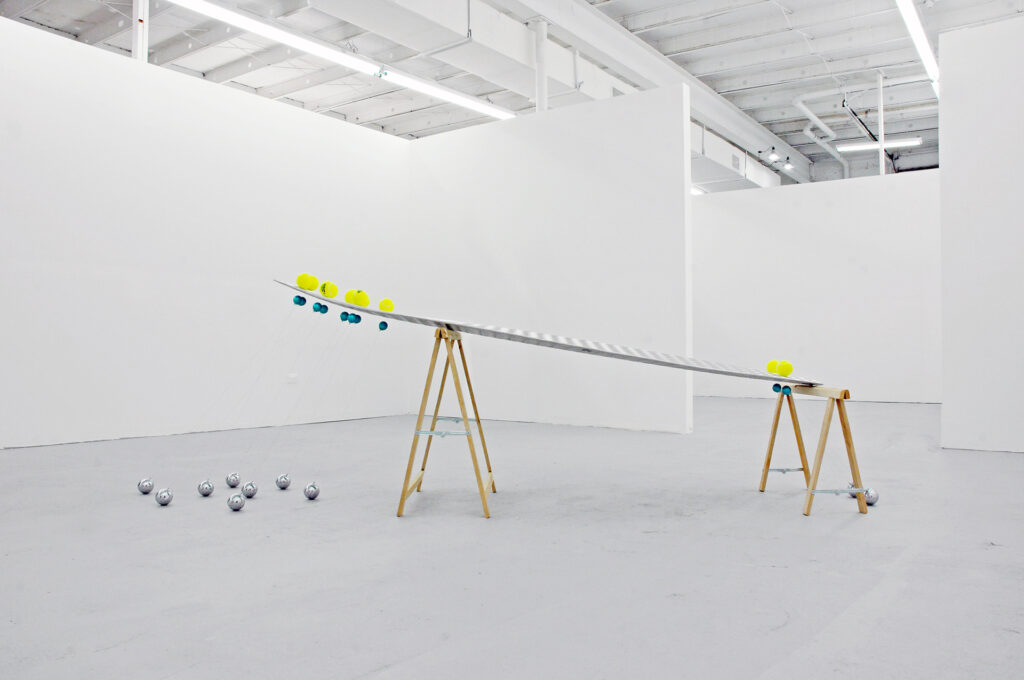
Tunnel Effect Through Malevich Influence



To get information on available Artworks, Commissions, and Collaborations:
